Crown reduction in Cricklewood
If you are looking for Crown reduction in Cricklewood, you may already have a tree that feels too large for the space it occupies. In many Cricklewood streets, gardens are compact, side access is limited, and mature trees can quickly begin to overshadow roofs, block light, or lean into neighbouring plots. A carefully planned crown reduction can make a tree safer, lighter, and better suited to its surroundings while keeping its natural shape as much as possible.
Local homeowners, landlords, property managers, and commercial sites often ask for crown reduction when a tree is becoming unmanageable but still healthy enough to keep. It is a practical arboricultural service that aims to reduce overall canopy size by shortening selected branches back to suitable growth points. Done properly, it helps maintain the tree’s structure, improves clearance, and can reduce pressure on branches during windy weather. For customers in Cricklewood, that can mean a better balance between tree preservation and everyday use of the property.
Whether your tree is in a back garden off Cricklewood Broadway, beside a driveway near Dollis Hill, or in a shared space close to Willesden Green, a local team understands the access, parking, and scheduling challenges that come with working in this part of northwest London. Request a free quote if you want the tree assessed properly and the work carried out with care.
What crown reduction means for your tree

Crown reduction is not the same as simply “cutting a tree down a bit.” It is a skilled pruning method designed to reduce the height and spread of the crown while keeping the tree structurally balanced. The aim is to shorten branch length to appropriate lateral growth points, helping the tree keep its natural appearance rather than leaving it looking severely topped or stripped.
This service is often suitable when a tree has outgrown its position, is casting too much shade, or is interfering with nearby buildings, fences, cables, or light levels. In Cricklewood, where properties often sit close together and gardens may back onto neighbouring homes or commercial yards, the right reduction can make a huge difference to daily comfort and long-term tree management.
Important: a responsible arborist will always assess whether crown reduction is the right option. In some cases, crown thinning, crown lifting, or selective pruning may be more appropriate. A healthy tree should never be reduced in a way that leaves it unstable or unable to recover well.
Why residents in Cricklewood request this service
There are several common reasons people ask for tree crown reduction in Cricklewood. Some are practical, some are safety-related, and some are about making the garden more enjoyable again. Local customers often tell us the tree has become too dominant over a patio, is blocking sunlight from a rear room, or is brushing against a roof or boundary line.
Other frequent reasons include wind sail concerns, interference with satellite signals or overhead lines, and general maintenance after years of steady growth. In built-up neighbourhoods like Cricklewood, where many homes are semi-detached, terraced, or converted into flats, trees often need careful management to remain compatible with the space around them.
For business premises, reducing the crown can help keep car parks, access routes, loading bays, and signage clear. A neat, well-managed canopy also improves the appearance of an entrance or frontage, which is especially useful for offices, schools, shops, and managed estates.
Benefits of crown reduction for Cricklewood properties
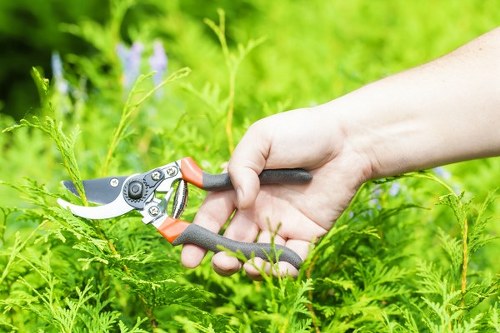
When done for the right reasons and by a trained tree surgeon, crown reduction can deliver several practical benefits. It can help a tree sit more comfortably within a restricted space while preserving its health and appearance. For many local customers, the most immediate advantage is simply reclaiming usable space and light.
Common benefits include:
- Improved daylight into gardens, kitchens, and ground-floor rooms
- Reduced weight on long or overextended branches
- Better clearance from roofs, fences, pathways, and neighbouring properties
- Lower wind resistance in exposed positions
- A tidier, more balanced canopy shape
- Less risk of branches interfering with daily use of the property
- Better long-term management of mature trees in confined urban spaces
In Cricklewood, mature trees are often a valuable feature, especially in streets where greenery softens the urban environment. A considered reduction allows the tree to remain part of the landscape without overwhelming the space around it. That is particularly useful where rear gardens are narrow, or where a tree sits close to extensions, conservatories, or shared boundaries.
It is also worth noting that a good reduction can help reduce the visual “bulk” of a tree without sacrificing all of its presence. The tree still contributes character and privacy, but in a more manageable way. That balance matters to many homeowners who want to protect both the tree and the use of their outdoor space.
When crown reduction is often the right choice
It may be suitable if:
- The tree is too tall for the setting but otherwise healthy
- Branches are reaching over roofs or neighbouring gardens
- The canopy is creating too much shade
- There is storm-related concern about long limbs
- You need to maintain the tree’s shape while reducing size
How the service works
Every tree is different, so the process starts with a proper assessment. A local tree surgeon will look at the species, condition, size, form, and surroundings before deciding how much can be safely reduced. This matters because different trees respond in different ways, and the same approach is not suitable for every specimen.
Once the inspection is complete, the work is planned to suit the tree and the site. In many Cricklewood locations, access is the main challenge. Rear access may be narrow, parking may be limited, and equipment sometimes needs to be carried through side passages or carefully positioned on the street. A local team understands how to prepare for that without turning the job into a disruption for you or your neighbours.
The pruning itself is carried out with professional tools and methods, aiming to create clean cuts and an even canopy. The arborist will reduce selected branches back to suitable growth points, keeping the natural shape in mind. When the work is finished, waste is usually cleared away so the area is left tidy and usable.
Typical stages of a crown reduction job
- Initial site assessment and discussion of your needs
- Review of tree size, species, and surrounding structures
- Selection of the appropriate reduction level
- Careful cutting and shaping of the crown
- Removal of branches, debris, and green waste
- Final visual check of the tree and working area
Some trees may need more than one visit if they are particularly large or if work needs to be phased carefully. That approach can be especially useful on mixed residential and commercial sites where access or public safety needs to be managed in stages.
What is included in a crown reduction service
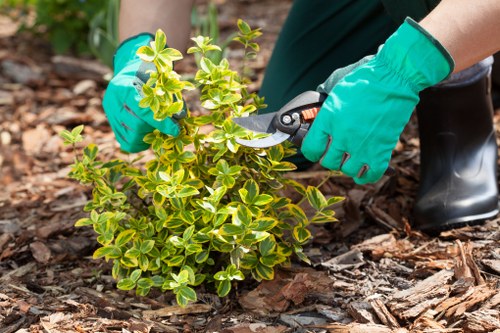
Customers often want to know exactly what they are getting when they book tree crown reduction in Cricklewood. While every job is slightly different, a professional service normally includes a full review of the tree, the agreed pruning work, and the removal of waste from the site. The focus should always be on improving the tree’s relationship with its surroundings rather than simply removing as much growth as possible.
A good service usually includes:
- Inspection of the tree and surrounding area
- Discussion of your goals, such as light, clearance, or safety
- Selective reduction of the canopy
- Attention to balance and shape
- Clearing of cut branches and debris
- Advice on future maintenance where needed
Many customers also ask for related work at the same time, such as crown thinning, deadwood removal, or crown lifting. These can sometimes be combined with a reduction if they help achieve a healthier and more practical result. A qualified arborist will explain what is suitable and what should be avoided.
Not every tree should be reduced heavily. Some species tolerate pruning better than others, and some are more vulnerable to stress if too much is removed at once. That is why a careful, species-aware approach is so important for long-term tree health.
When to consider additional tree care
You may also want to consider other forms of tree maintenance if you notice:
- Dead branches hanging in the canopy
- Crossing or rubbing limbs
- Branches touching walls or roofs
- Uneven growth after previous pruning
- General decline in shape or vigour
Why a local Cricklewood tree team is useful
Choosing a local company for crown reduction in Cricklewood has real advantages. Tree work in an urban area is often shaped by practical issues that out-of-area crews may not know as well. Parking restrictions, narrow residential roads, busy junctions, and shared access routes can all affect how quickly and cleanly a job is completed.
A local team is more likely to be familiar with the mix of property types across Cricklewood, from period homes and mansion blocks to newer developments and commercial premises. That familiarity helps when planning equipment access, managing neighbours’ concerns, and selecting the right time to carry out the work. It also helps with understanding the local tree stock, which often includes mature street-side trees and established garden trees that have been left to grow for many years.
Why local knowledge matters:
- Better awareness of cramped access and street parking issues
- More suitable planning for front gardens, back gardens, and courtyard spaces
- Practical experience with neighbour boundaries and shared spaces
- Faster understanding of what style of pruning suits the area
- Convenient scheduling for residential and commercial customers
For business owners and property managers, a local service is also easier to schedule around opening hours, deliveries, or tenant needs. If you need a tree dealt with efficiently and with minimum fuss, book your service now and request a site assessment tailored to your property.
Cricklewood property types and common tree challenges
Cricklewood includes a wide range of settings, and that variety creates different tree care needs. Many homes have modest front gardens or paved forecourts, while rear gardens may be long, narrow, and closely bordered by neighbouring properties. In these settings, a mature tree can quickly become too large for the available space if it is not maintained regularly.
In flat conversions and shared residential blocks, trees often need to be kept clear of windows, balconies, communal paths, and bin stores. For landlords and managing agents, a crown reduction can help keep the site safe and presentable without removing a valuable mature tree. In commercial settings, such as offices, schools, hospitality sites, and retail forecourts, tree management is equally important for visibility, access, and first impressions.
Tree species also play a role. Some species develop broad canopies, while others produce long limbs that extend quickly towards nearby structures. A careful arborist will take this into account rather than applying a one-size-fits-all approach. That is especially important in dense neighbourhoods where the consequences of poor pruning are more likely to be noticed by residents immediately.
Nearby areas commonly covered
Customers looking for crown reduction in Cricklewood often also need tree services in nearby locations such as:
- Dollis Hill
- Willesden Green
- Brent Cross
- West Hampstead
- Childs Hill
- Neasden
- Kilburn
- Golders Green
Coverage across nearby areas can be helpful if you manage multiple properties or have a tree close to a boundary line that affects more than one street. It also means a team can respond with a good understanding of local access conditions and property layouts.
How to prepare for a crown reduction visit
Good preparation helps the work run smoothly and safely. You do not need to do anything complicated, but a few simple steps can make a real difference, especially if access is tight or the tree is in a busy front garden. If there is a problem area, such as a fragile fence panel or a parked vehicle that could restrict access, it is best to flag this before the visit.
Preparation checklist:
- Move vehicles away from the working area if possible
- Unlock side gates or other access points
- Keep garden ornaments, furniture, or washing lines clear of the tree
- Let neighbours know if branches may overhang a shared boundary
- Highlight any known issues such as weak branches or poor visibility from a room window
- Secure pets and ensure children stay away from the work zone
If your property has particularly restricted access, it helps to mention this early. A local company can then plan how to bring tools, remove waste, and protect surfaces without unnecessary delays. In a busy part of northwest London, that kind of preparation keeps the whole process calmer and more efficient.
Pricing factors for crown reduction
It is normal to ask what affects the cost of crown reduction in Cricklewood. While exact pricing depends on the tree and the site, several factors usually influence the quote. Because every job has different access and pruning requirements, a proper assessment is the best way to understand the work involved.
Typical factors include:
- Tree height and overall spread
- Species and how it responds to pruning
- Whether the canopy is easy to reach
- Parking, access, and waste removal challenges
- Whether additional work is needed, such as deadwood removal
- How much of the crown needs to be reduced
- Whether the tree is in a residential, shared, or commercial setting
Jobs in tight back gardens or properties with limited access may take longer to complete than a straightforward front-garden tree. Likewise, very tall or widely spreading trees may require more labour and careful rigging. A transparent quote should reflect the actual site conditions rather than offering a generic figure that may not suit your situation.
If you are comparing options, focus on whether the service includes assessment, tidy work, and sensible advice about the tree’s future. The cheapest option is not always the best if it risks poor regrowth, stress to the tree, or unnecessary mess.
When crown reduction should be avoided or approached carefully
Although crown reduction is useful, it is not the answer for every tree. Some trees react badly to heavy reduction, especially if too much foliage is removed in one go. That can lead to stress, weaker regrowth, or a poor shape that is difficult to correct later. A good arborist will only suggest reduction where it makes sense.
It may also be inappropriate if the tree is already in decline, has structural defects, or is protected in a way that limits work. In some cases, a combination of lighter pruning and follow-up monitoring is a better solution than a significant cutback. The key is to preserve the health and long-term character of the tree while resolving the practical issue you are facing.
Ask for professional advice if the tree:
- Has signs of decay, dieback, or cracking
- Has been heavily pruned before and is uneven in shape
- Is growing close to a building or boundary with limited clearance
- Has weak unions or split branches
- May be subject to planning or preservation controls
Commercial crown reduction in Cricklewood
Commercial customers often need tree work to fit around operations, customers, and deliveries. In Cricklewood, that can mean working around office parking, shopfront access, school hours, or tenant schedules. A local tree team can plan the reduction to keep disruption to a minimum while still completing the work safely and professionally.
For commercial sites, crown reduction may help improve safety near entrances, create a clearer line of sight, and reduce branch interference with signage or pedestrian routes. It can also help keep site maintenance straightforward, particularly where trees are part of a managed landscape rather than a private garden. If your premises need a tidy, practical result, it is worth arranging an assessment and discussing the best time to carry out the work.
Landlords and property managers also benefit from keeping trees under control before they become a complaint or a hazard. Regular attention is often easier and more cost-effective than dealing with a heavily overgrown canopy later on.
Frequently asked questions
How much can a tree be reduced?
That depends on the species, condition, and location of the tree. A responsible arborist will recommend a suitable level of reduction rather than removing too much at once. The aim is to improve size and shape without harming long-term health.
Will crown reduction damage the tree?
When done properly, it should not damage the tree unnecessarily. The work needs to be planned around the tree’s biology and structure. Heavy or poorly executed pruning can create problems, which is why skilled assessment matters.
How often will my tree need reducing?
That depends on the tree species and how quickly it grows. Some trees need maintenance more regularly than others, especially in small urban spaces. A local arborist can suggest a sensible future interval after the first visit.
Can you work in a small Cricklewood garden?
Yes, many crown reduction jobs are carried out in compact gardens with restricted access. Careful planning, the right equipment, and tidy working methods are especially important in these settings.
What if the tree is near neighbours or a shared boundary?
That is very common in Cricklewood. The work can be planned to respect boundary lines and minimise disruption. If branches overhang a neighbour’s property, it is wise to communicate clearly before work begins.
Do I need to clear the whole garden first?
No, but it helps to move anything fragile or valuable away from the work area. Garden furniture, ornaments, and vehicles should ideally be kept clear so the team can work safely and efficiently.
Why customers choose crown reduction instead of removal
Many customers contact us because they want the tree to stay, but in a better form. Crown reduction can be a good middle ground when a tree has become too large but still adds value to the property. It preserves shade, privacy, and greenery while making the canopy more manageable.
This is particularly relevant in Cricklewood, where mature trees can be an important part of a home’s character or a business frontage. Removing a tree is a bigger decision, often with more disruption and a greater impact on the landscape. If reduction can solve the problem safely, it may be the more balanced option.
In short: if you want to keep the tree but improve light, space, and safety, crown reduction is often the service to consider first.
Book a crown reduction in Cricklewood
If your tree has grown too large for its setting, is affecting light, or is beginning to feel awkward beside your home or business, now is a good time to arrange an inspection. A local team can assess the tree, explain the options, and recommend a reduction plan that suits both the tree and the site.
For homeowners, landlords, and commercial clients alike, the goal is the same: a safer, tidier, more usable outdoor space with a tree that still looks natural and well cared for. Contact us today to request a free quote and discuss crown reduction in Cricklewood with a team that understands local properties and local access challenges.
Whether the issue is shade, size, clearance, or peace of mind, the right pruning approach can make a real difference. Book your service now and take the first step toward a more manageable tree and a better-used outdoor space.